Fathom vs Gravy
Comparisons
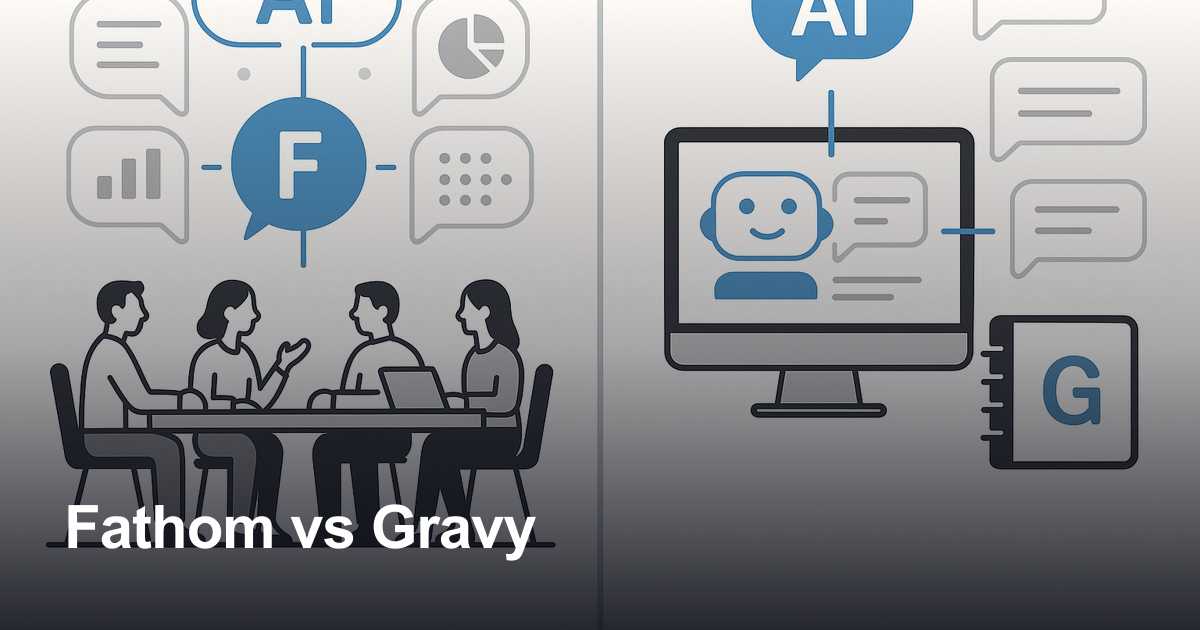
Fathom is an AI meeting assistant that records, transcribes, summarizes, and searches meetings so teams can focus on conversations.

Gravy is an AI chat notebook for the perfect thinking workspace, allowing you to capture, organize and convert insights from AI conversations into structured and editable Smart Notes.

Is Fathom better than Gravy for meeting notes?
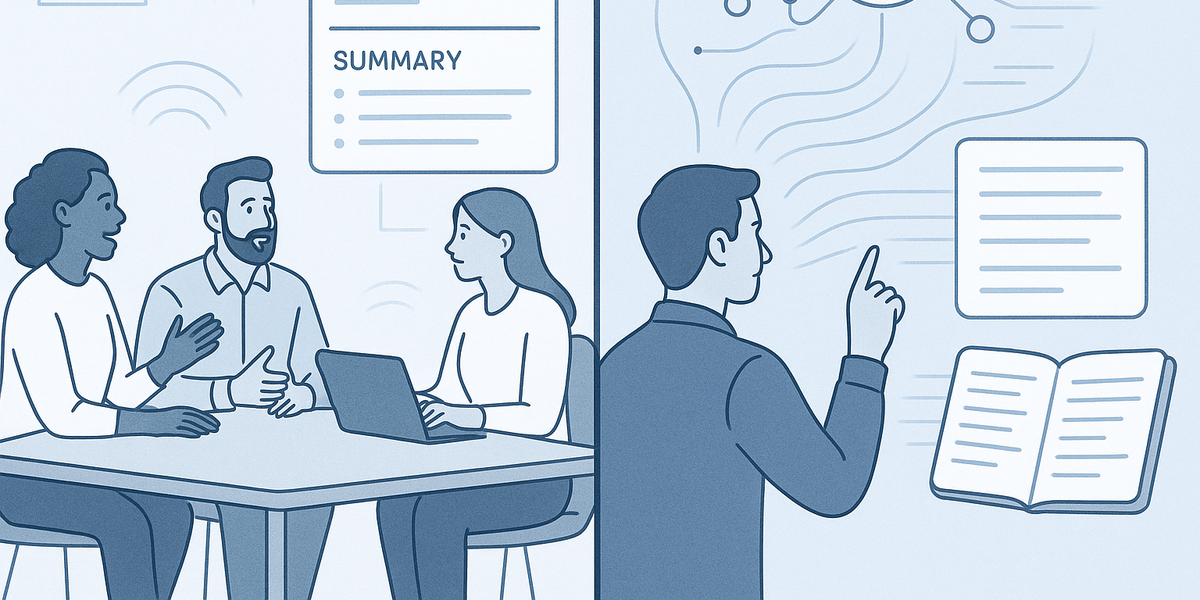
Fathom is better if the thing you need to capture is a meeting. Its product is built around the meeting lifecycle: join or capture a call, transcribe what was said, summarize the discussion, identify action items, and make the conversation searchable afterward. That is a real and valuable category, especially for sales teams, consultants, recruiters, customer success teams, founders, managers, and anyone whose work depends on remembering what happened in calls.
That does not mean Fathom and Gravy are interchangeable. Fathom is primarily a meeting assistant. Gravy is an AI chat notebook. The difference is the source of the information. In Fathom, the source is spoken conversation between people. In Gravy, the source is an AI response inside a thinking session. If you are on Zoom, Google Meet, Microsoft Teams, or an in-person conversation and want a transcript or recap, Fathom is the closer fit. If you are using AI to brainstorm an app idea, plan a project, study a topic, compare tools, or turn scattered thinking into reusable notes, Gravy fits a different moment.
The most useful comparison is not "which app is better?" It is "where does the note begin?" If the note begins in a meeting, Fathom has the advantage. If the note begins in a useful AI answer that would otherwise disappear inside chat history, Gravy is built for that capture step.
- Use Fathom when your source material is a meeting, sales call, customer interview, class discussion, or internal team conversation.
- Use Gravy when your source material is an AI response from brainstorming, planning, researching, learning, writing, or decision-making.
- Use Fathom to document what happened; use Gravy to preserve the best parts of what AI helped you create or understand.
- Use both when meetings create raw context and AI chats turn that context into plans, frameworks, drafts, or next steps.
| Question | Fathom | Gravy |
|---|---|---|
| Primary category | AI meeting assistant | AI chat notebook |
| Main source | Spoken meetings and calls | AI response blocks |
| Best output | Transcripts, summaries, action items | Structured, editable Smart Notes |
| Best user problem | I missed or forgot meeting details | Useful AI answers get buried |
| Best workflow moment | During and after meetings | During AI thinking sessions |
Can Fathom record Zoom, Google Meet, and Microsoft Teams meetings?
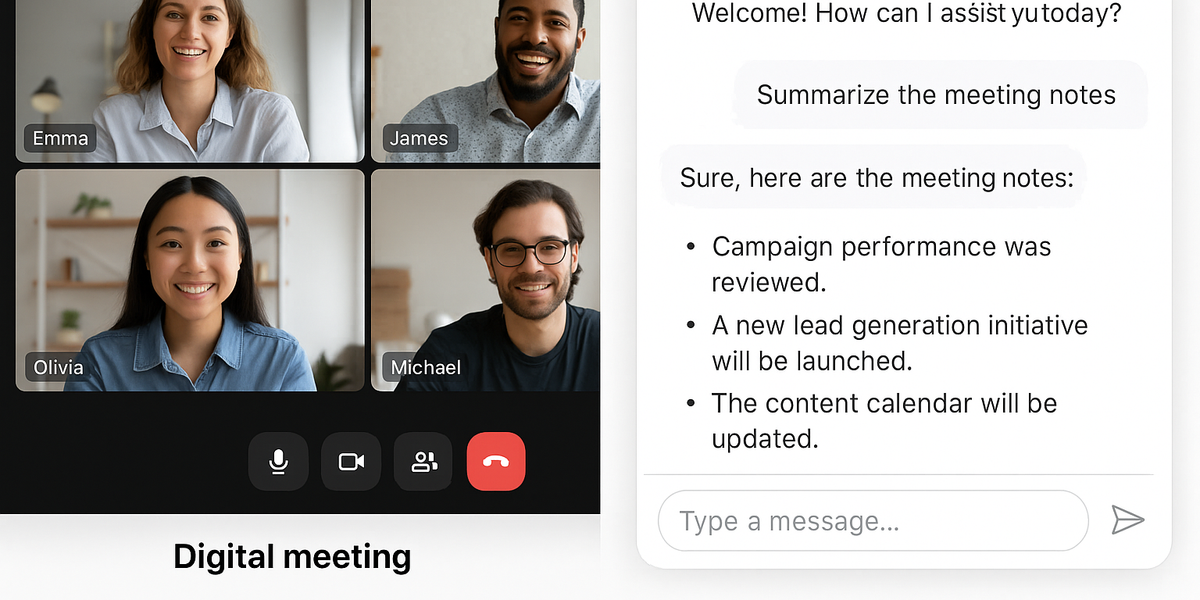
Yes. Fathom is designed for the meeting platforms where business conversations already happen. Its integration pages describe support for Zoom, Google Meet, and Microsoft Teams, and its broader integrations page shows a workflow that extends beyond transcription into Slack, Salesforce, HubSpot, Asana, Zapier, Notion, public API access, and other systems. This is where Fathom becomes especially useful for teams: the meeting is not just saved; the follow-up can move into the tools the team already uses.
For example, a sales team may want meeting summaries connected to CRM records. A marketing team may want action items pushed into task tools. A manager may want a searchable history of one-on-ones or team calls. Fathom is strong in those cases because the core object is still the meeting: who attended, what was said, what was decided, what needs follow-up, and where the recap should go.
Gravy’s workflow is different. It is not trying to be the tool that joins your meetings and records everyone. It is for the moments after or outside the meeting when you are thinking with AI. You might paste meeting context into AI, ask for a launch plan, compare messaging angles, draft a customer follow-up, or explore a product decision. When the AI gives you a useful section, Gravy lets that section become a Smart Note instead of another buried answer.
- Choose Fathom when you want a meeting captured automatically or semi-automatically across your call stack.
- Choose Fathom when the follow-up needs to sync into CRM, Slack, project management, or team collaboration tools.
- Choose Gravy when the important output comes from an AI conversation after the meeting context has been analyzed or developed.
- Choose Gravy when you care less about the raw meeting record and more about saving the best AI-generated plan, explanation, or framework.
How to decide if the meeting workflow belongs in Fathom or Gravy
- Identify the sourceIf the source is a live call, customer meeting, interview, webinar, or in-person discussion, start with Fathom.
- Identify the outputIf you need transcripts, action items, highlights, or meeting summaries, Fathom is the natural tool.
- Look for the thinking stepIf you later use AI to turn that meeting context into strategy, notes, ideas, or next steps, Gravy becomes useful.
- Save the reusable insightWhen the AI response contains a block worth keeping, save it in Gravy as a structured Smart Note instead of copy-pasting into a separate app.
Is Fathom free, and what do you get on paid plans?
Fathom has one of the more generous entry points in the AI meeting assistant category. Its pricing page shows a free individual plan with unlimited recordings and transcriptions, instant AI call summaries, clips, playlists, and search across calls. That makes it easy for an individual user to test whether Fathom solves their meeting-note problem before paying. For many people, that free plan is the reason Fathom appears in so many conversations about AI meeting tools.
The paid plans move Fathom toward more advanced individual and team workflows. Premium adds advanced call summaries, AI-generated action items, a conversational meeting assistant, and a custom meeting bot. Team and Business tiers add collaboration, global search across shared calls, folders, comments, keyword alerts, customized transcription vocabulary, SSO, CRM field sync, deal views, coaching metrics, and AI scorecards. In plain English, Fathom’s paid plans are not just about more recording time. They are about making meeting intelligence operational across a team.
This is another place where the category difference matters. Gravy is not competing to be the cheapest meeting recorder. Gravy is for people who use AI itself as a thinking partner and need a clean way to keep the useful parts. Pricing comparisons only make sense after the use case is clear. If you need meeting capture, evaluate Fathom’s plans. If you need an AI chat notebook for saving AI response blocks, evaluate Gravy.
- Fathom’s free plan is attractive for individuals who mainly need meeting recording, transcription, summaries, clips, and searchable call history.
- Fathom’s paid plans make more sense when you need advanced summaries, action items, team collaboration, CRM sync, or security controls.
- Gravy’s value is not meeting storage; it is reducing the friction between AI conversations and reusable Smart Notes.
- Do not choose based only on price. Choose based on whether your notes start in meetings or in AI chats.
| Plan question | Fathom answer | Gravy comparison |
|---|---|---|
| Is there a free option? | Fathom says its individual free plan is free forever | Gravy offers a 7-day free trial |
| What is paid for? | Advanced meeting summaries, actions, team features, CRM workflows | AI chat notebook workflow and Smart Notes |
| Who benefits most? | Meeting-heavy individuals and teams | AI-heavy thinkers and planners |
| What should you compare? | Meeting capture depth | AI insight capture depth |
How Gravy fits
Gravy fits this comparison when the reader’s real pain is not meeting transcription, but AI chat sprawl. Fathom helps capture conversations with people. Gravy helps capture useful responses from conversations with AI. If a planning session, research thread, study conversation, or brainstorming chat produces one section worth keeping, Gravy turns that block into a structured, editable Smart Note without forcing the user to leave the chat flow.
How is Gravy different from Fathom?
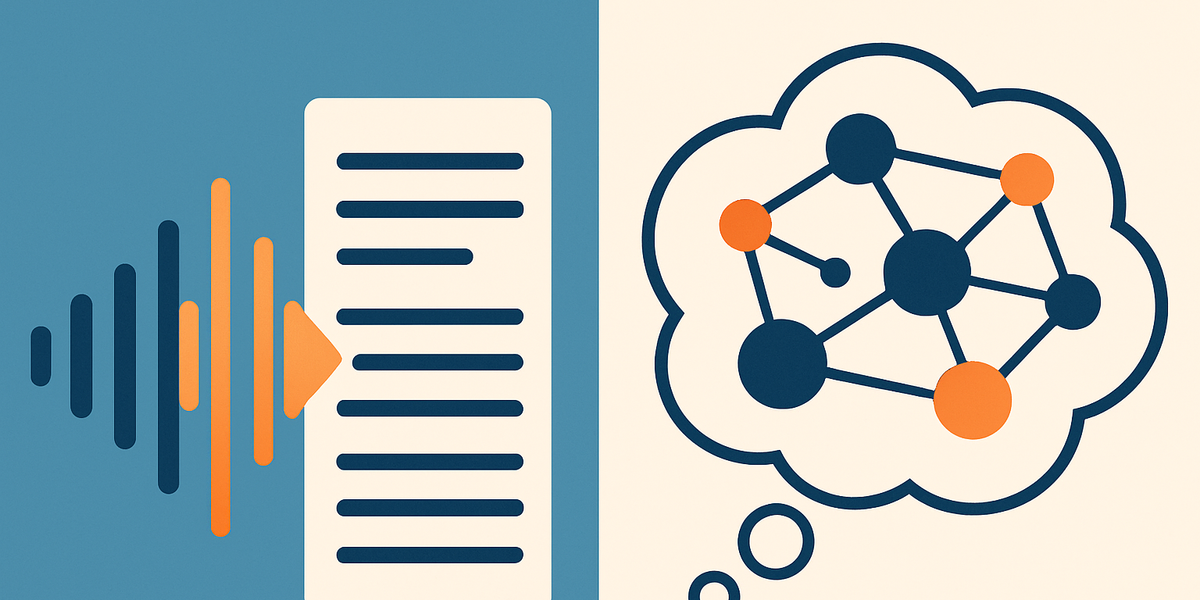
Gravy is different from Fathom because it starts with AI conversation, not meeting transcription. Fathom is built for meetings: capture the call, transcribe the conversation, summarize what happened, create action items, and make the meeting searchable. Gravy is built for AI thinking sessions: chat with AI, identify a useful response block, and save that block as a structured Smart Note.
That distinction is important for SEO, product comparison, and real user decision-making. Someone searching for Fathom may be trying to stop taking notes during meetings. Someone searching for Gravy’s use case may be trying to stop losing useful ChatGPT, Claude, Gemini, or other AI responses. These are adjacent productivity problems, but they are not the same job.
A practical example makes the difference clear. If you are on a sales call and want a recap, Fathom is the right kind of product. If you later ask AI to turn that sales call context into a follow-up sequence, objection-handling framework, product feedback summary, or strategic account plan, Gravy is where the useful AI-generated output can become a Smart Note. In that workflow, Fathom captures what happened. Gravy preserves what the AI helped you build from it.
- Gravy is for AI chat-based thinking, not automatic meeting recording.
- Gravy focuses on saving useful AI response sections as Smart Notes, not storing every word of a meeting transcript.
- Gravy helps users keep the selected insight, framework, checklist, explanation, or plan that emerges during an AI conversation.
- Gravy is a better fit when the user’s frustration is copy-pasting AI answers into Apple Notes, Google Docs, Notion, or screenshots.
| Difference | Fathom | Gravy |
|---|---|---|
| Category | AI meeting assistant | AI chat notebook |
| Capture object | Meeting transcript and recap | AI response block |
| User action | Attend a meeting while notes are captured | Think with AI and save useful blocks |
| Reusable output | Call summaries and action items | Editable Smart Notes |
| Best reader | Meeting-heavy professionals | AI-heavy planners, learners, creators, and builders |
FAQ
Is Fathom better than Gravy?
Fathom is better if your main problem is meeting notes, call transcription, action items, and searchable meeting history. Gravy is better if your main problem is saving useful AI chat responses as structured Smart Notes.
Is Gravy a Fathom alternative?
Gravy is not a direct replacement for Fathom’s meeting recording and transcription workflow. It is an alternative for people who need an AI chat notebook to save useful response blocks from AI conversations.
Does Fathom have a free plan?
Yes. Fathom’s pricing and help pages describe a free individual plan with unlimited recordings and transcriptions. Paid plans add more advanced individual, team, CRM, collaboration, security, and workflow features.
Does Fathom join meetings as a bot?
Fathom supports meeting capture workflows that can include bot capture, and its current overview also describes bot-free options such as transcript-only and audio plus transcript capture. The right setup depends on the meeting environment and user preference.
Can Fathom record Microsoft Teams, Zoom, and Google Meet?
Yes. Fathom’s integration pages describe support for Zoom, Google Meet, and Microsoft Teams, with transcripts, summaries, highlights, and action items after meetings.
Should I use Fathom or Gravy for AI notes?
Use Fathom if your AI notes start from spoken meetings. Use Gravy if your AI notes start from ChatGPT-style conversations, brainstorming sessions, research threads, learning prompts, or planning workflows.
Can I use Fathom and Gravy together?
Yes. A strong workflow is to use Fathom to capture a meeting, then use AI to analyze or develop the meeting context, and use Gravy to save the best AI-generated plans, summaries, frameworks, or follow-up ideas as Smart Notes.