Why Do AI Models Give Different Answers?
AI Guides
AI models are probabilistic assistants that can give different answers because each model is trained, tuned, and evaluated differently.

Gravy is an AI chat notebook for the perfect thinking workspace, allowing you to capture, organize and convert insights from AI conversations into structured and editable Smart Notes.

Why do AI models give different answers to the same prompt?

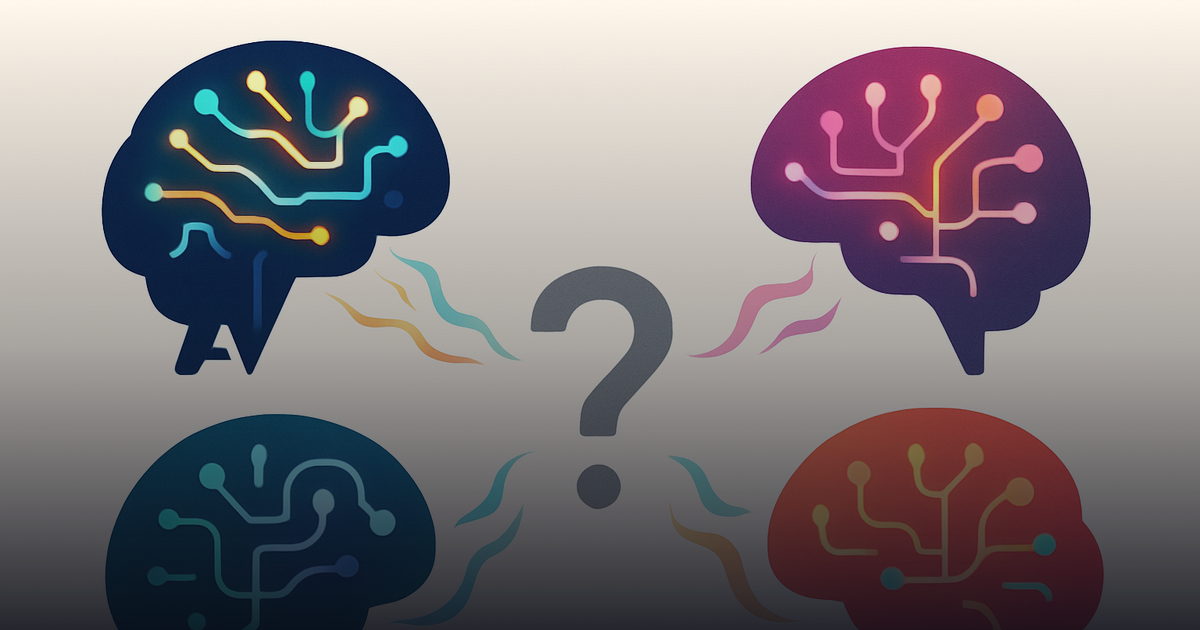
AI models give different answers because they are not search boxes with one fixed result. They are trained systems that predict, reason, rank, and generate language based on patterns learned from data, the instructions they were given, the tools available to them, and the way each company shaped the model after training.
That means the same question can produce different answers across ChatGPT, Claude, and Gemini even when the words of the prompt are identical. One model may organize the answer into steps. Another may compress the answer into facts. Another may slow down and add caveats. None of that is random in the everyday sense. It happens because each model has a different training history, different alignment choices, different product goals, different context handling, and sometimes different access to tools or sources.
This is why asking one AI model can feel like asking one smart person. You may get a useful answer, but you are still getting one interpretation of the question. If the question is simple, that may be enough. If the question involves judgment, research, planning, health, finance, product strategy, legal risk, or a decision you actually care about, one interpretation may hide too much. The real value comes from seeing where multiple models converge and where they disagree.
- Different training data means each model learned different patterns, examples, styles, and factual associations.
- Different post-training choices mean each model is rewarded for different behaviors, such as caution, directness, helpfulness, or brevity.
- Different system instructions can change how a model handles uncertainty, safety, tone, refusal, structure, and user intent.
- Different tool access can change whether a model can look something up, analyze a file, browse sources, or rely only on stored knowledge.
- Different sampling and generation behavior can make answers vary even when the model understands the same prompt.
| Reason answers differ | What changes | What the user notices |
|---|---|---|
| Training data | The examples the model learned from | Different facts, references, and assumptions |
| Alignment | The behaviors the model is encouraged to show | Different levels of caution, confidence, or nuance |
| Prompt interpretation | How the model reads your intent | Different framing of the same question |
| Tool access | Whether the model can use outside tools | Different freshness, citations, or calculations |
Why can one AI answer sound confident but still be wrong?
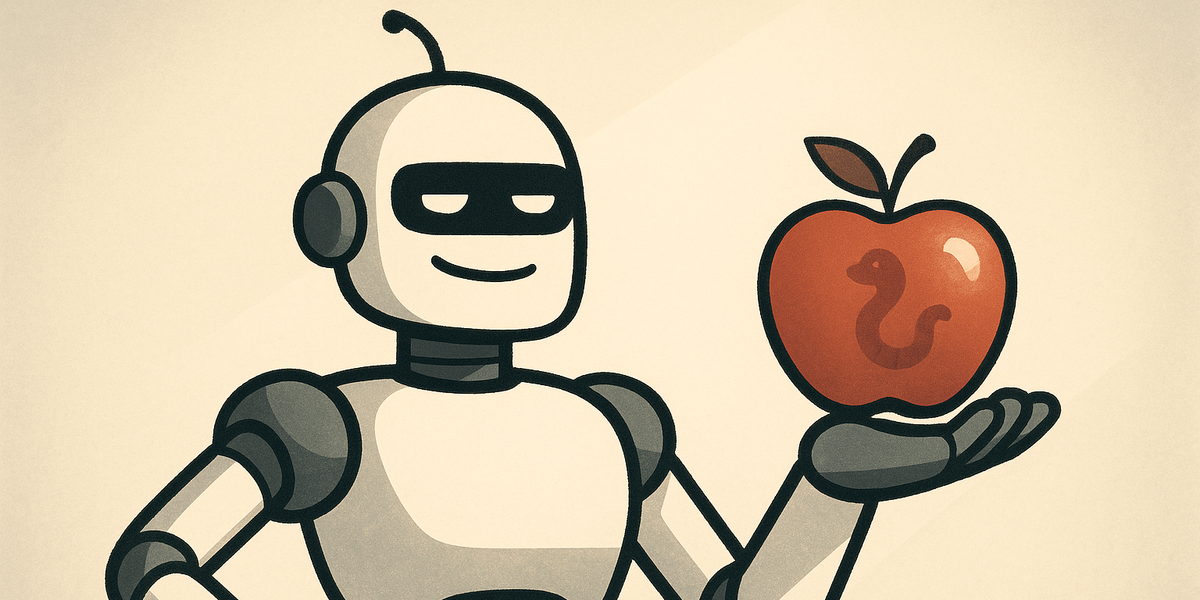
One AI answer can sound confident because language models are built to produce fluent language, not to experience certainty the way a person does. A model can generate an answer that looks organized, polished, and authoritative while still being incomplete or incorrect. This is the trust problem behind many AI workflows: the answer may be useful, but the user often cannot see what was missed.
This does not mean AI is useless. It means the user needs a better workflow than blind trust. The most dangerous AI answer is not the obviously bad one. It is the clean, confident answer that skips the caveat that would have changed your decision. It may leave out a risk. It may make an assumption you did not intend. It may give a generic answer when your situation requires a more specific one. It may summarize a topic from one angle and never tell you there was a second angle.
Asking multiple models helps because disagreement is information. When ChatGPT, Claude, and Gemini all land on the same conclusion, that agreement can increase confidence. When they split, the split tells you the question may be ambiguous, underspecified, controversial, or dependent on context. That is often the moment when a better answer begins.
- First, read the answer for confidence signals: specific claims, numbers, strong recommendations, or absolute language.
- Second, ask whether the answer explains uncertainty or simply sounds certain.
- Third, compare the answer against another model when the decision is important.
- Fourth, pay attention to disagreement because it often reveals missing assumptions.
- Fifth, save the final reasoning, not just the final answer, so you can reuse it later.
How to spot when an AI answer needs a second opinion
- Look for hidden assumptionsAsk whether the answer depends on a location, budget, timeline, audience, data source, or goal the model guessed instead of confirming.
- Check for unsupported specificsBe careful when an answer includes exact numbers, dates, names, or policies without explaining where they came from.
- Compare the framingAsk another model the same question and look for a different lens, caveat, or risk that the first model skipped.
- Save the best synthesisWhen the models agree or when the tradeoffs become clear, save the useful reasoning as a note so it does not disappear in chat history.
Why do ChatGPT, Claude, and Gemini feel different?

ChatGPT, Claude, and Gemini feel different because they are built by different companies with different model families, product philosophies, safety systems, training pipelines, and default behaviors. In practice, users often notice the differences as personality, even though the deeper cause is technical and design-driven.
ChatGPT often feels organized and action-oriented. It is useful when you want steps, outlines, structured plans, implementation details, rewrite options, or a clear path from question to action. Gemini often feels concise and factual, especially when a user wants specifics, fast summaries, concrete details, or information-dense answers. Claude often feels thoughtful and conversational, with more room for nuance, tradeoffs, caveats, and human-sounding writing.
Those tendencies are not permanent laws. Any model can surprise you. The same model can behave differently depending on prompt wording, context, tool access, and the version being used. But as a user workflow, the pattern is useful: one model may give you structure, another may give you specifics, and another may give you nuance. When you combine all three, you are less dependent on one model’s default style.
- ChatGPT is often useful for structure: plans, steps, lists, workflows, outlines, and clear execution paths.
- Gemini is often useful for concise factual coverage: fast summaries, specific details, and information-dense responses.
- Claude is often useful for nuance: tradeoffs, caveats, natural writing, decision framing, and context-sensitive reasoning.
- The best model depends on the task, but many serious questions benefit from more than one model’s perspective.
| Model | Common strength | Useful for |
|---|---|---|
| ChatGPT | Structure and execution | Plans, outlines, steps, practical drafts |
| Gemini | Concise factual coverage | Specifics, quick research framing, dense summaries |
| Claude | Nuance and writing | Tradeoffs, caveats, human-sounding explanations |
| All three together | Perspective diversity | Decisions, strategy, research, planning |
How Gravy fits
Gravy fits this problem because people should not have to choose one AI model, open three separate apps, paste the same question three times, and manually compare the answers. With Gravy's "Ask All Three" feature, it sends one question to ChatGPT, Claude, and Gemini, brings their answers together, and lets you save the most useful parts as Smart Notes from the same AI chat notebook.
How does Gravy’s "Ask All Three" feature help?
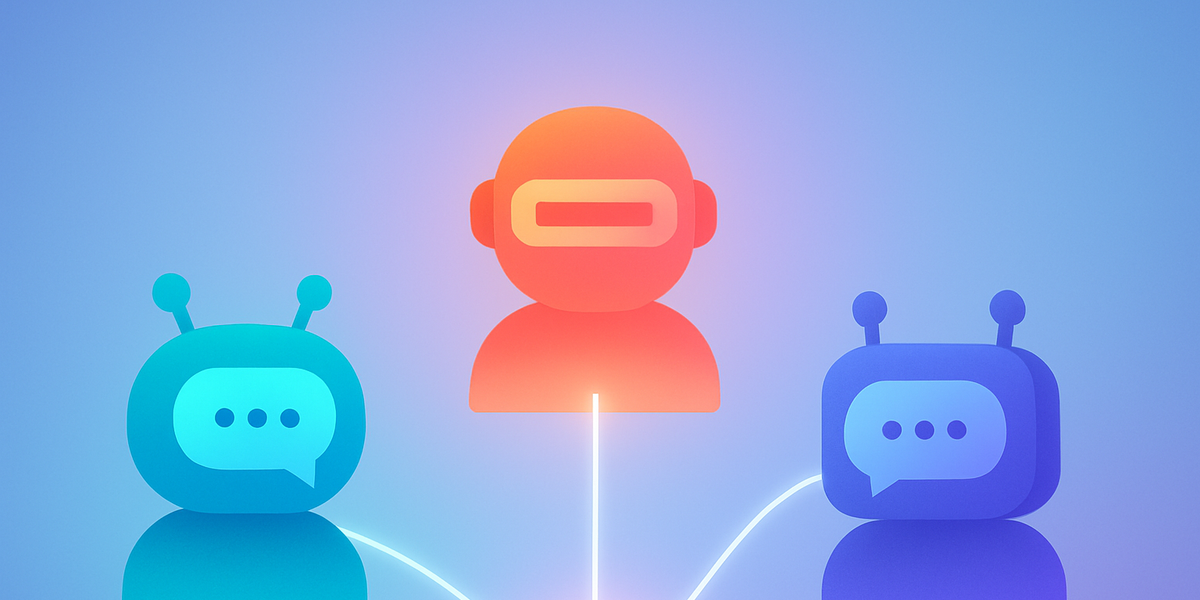
Gravy’s "Ask All Three" feature helps by turning model comparison into one normal chat workflow. Instead of picking ChatGPT, Claude, or Gemini before you even know which one will answer best, you type the question once. Gravy sends it to all three, compares the useful parts in the background, and gives you one clear answer built from the strengths of each model.
That matters because most users do not have time to run every important question through three different tools. They choose one AI, trust the answer, and move on. Sometimes that is fine. But when the question matters, a single model can miss the better framing. It can skip the tradeoff. It can give the clean answer instead of the honest one. The "Ask All Three" feature gives you a broader view without forcing you to do the manual work.
The Gravy advantage is not just asking three models. It is asking three models inside an AI chat notebook. After the answer is combined, you can capture the useful sections as Smart Blocks and save them into structured, editable Smart Notes. That means the stronger answer does not become another buried chat response. It becomes something you can reuse.
- Use Ask All Three feature when you want a more complete answer than one model may provide.
- Use it for questions where agreement matters, such as planning, research, strategy, product decisions, or big purchases.
- Use disagreement as a signal that the question may need more context, a clearer constraint, or human judgment.
- Save the final synthesis as a Smart Note so the best reasoning stays organized and searchable.
- Treat the combined answer as a stronger starting point, not a replacement for checking sources when facts are high-stakes.
| Old workflow | Gravy workflow | Why it matters |
|---|---|---|
| Pick one model | Ask ChatGPT, Claude, and Gemini | Less dependence on one answer |
| Open three apps | Type once inside Gravy | Less context switching |
| Compare manually | Get one synthesized answer | Faster decision support |
| Copy notes elsewhere | Save Smart Blocks as Smart Notes | Better reuse later |
FAQ
Why does ChatGPT give a different answer than Claude?
ChatGPT and Claude can answer differently because they are separate model families built by different companies with different training data, post-training methods, safety rules, product goals, and response styles. The difference is especially noticeable on questions involving judgment, writing style, uncertainty, or tradeoffs.
Why does Gemini give different answers than ChatGPT?
Gemini and ChatGPT may interpret the same prompt differently, prioritize different details, and use different model capabilities or tool access. For factual or current questions, differences can also come from how each system retrieves, summarizes, or weights information.
Is it better to ask multiple AI models?
It is often better to ask multiple AI models when the question is important, ambiguous, or decision-heavy. If the models agree, you gain confidence. If they disagree, you learn which assumptions, caveats, or options need closer attention.
Can AI models be confidently wrong?
Yes. AI models can produce answers that sound fluent and certain while still being wrong or incomplete. That is why users should be cautious with exact facts, high-stakes decisions, and claims that do not include sources or uncertainty.
What is Gravy’s Ask All Three feature?
Ask All Three is a Gravy feature that lets you type one question and send it to ChatGPT, Claude, and Gemini at the same time. Gravy brings the answers together into one clearer response, then lets you save the useful parts as Smart Notes.
Should I always use Gravy's Ask All Three feature?
You do not need it for every small question. It is most useful when the answer matters: planning, research, writing, business ideas, product decisions, comparisons, learning, or any situation where a second and third perspective could prevent a blind spot.